Minimal delay()/millis() for a plain desktop C++ build - no Arduino core, no ESP-IDF. More...
#include <chrono>#include <thread>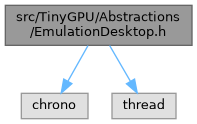
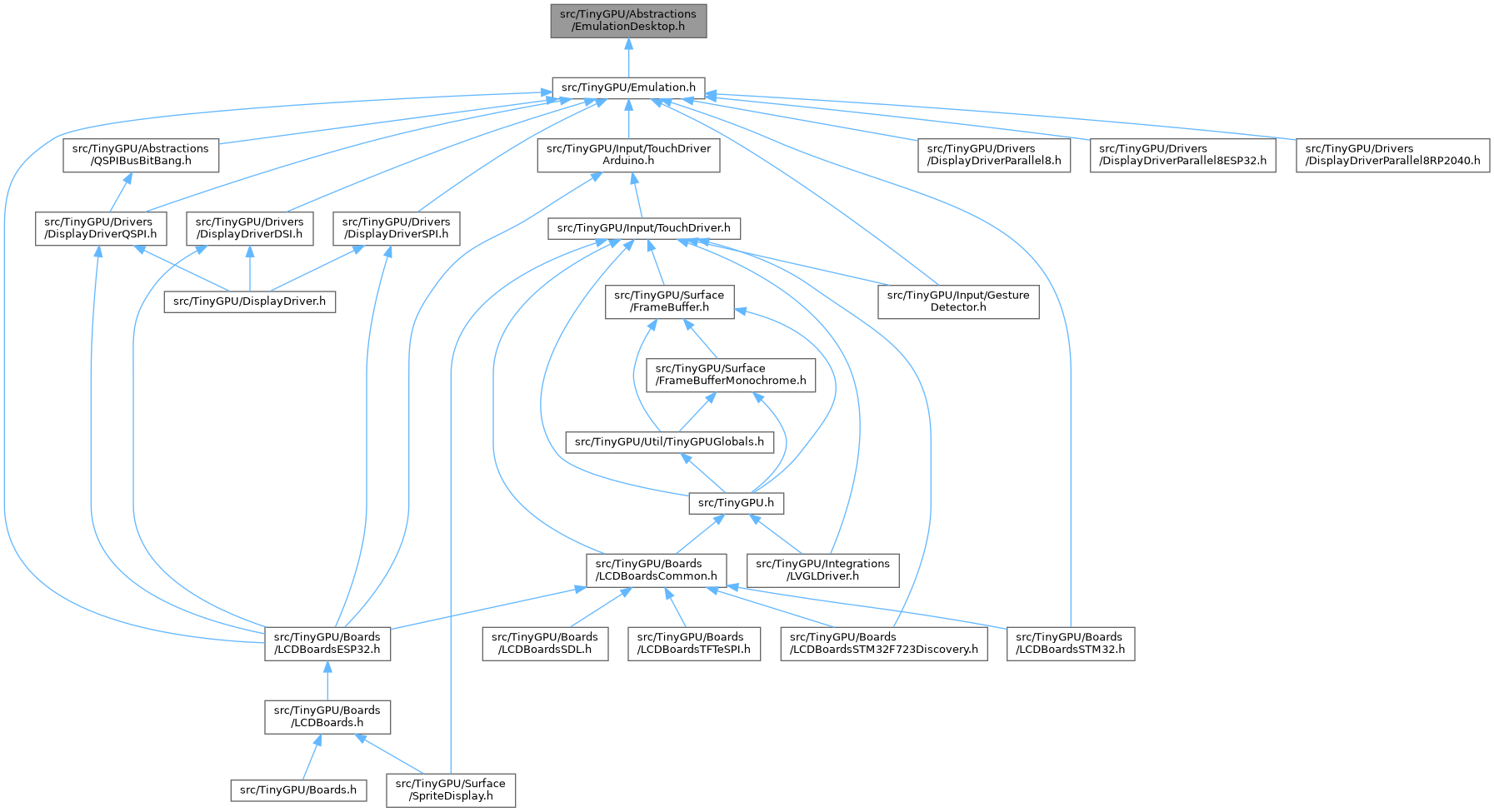
Go to the source code of this file.
Namespaces | |
| namespace | tinygpu |
Functions | |
| unsigned long | millis () |
| void | delay (unsigned long ms) |
Detailed Description
Minimal delay()/millis() for a plain desktop C++ build - no Arduino core, no ESP-IDF.
This is the desktop branch of TinyGPU/Emulation.h's fallback - include that instead of this file directly; it decides whether a real Arduino core is available, and routes here only when it isn't and ESP_PLATFORM is also undefined (a plain desktop C++/CMake build that links TinyGPU directly, without the Arduino-Emulator this project's own examples fetch - see the top-level CMakeLists.txt).
millis() is what TinyGPU/Input/GestureDetector.h calls internally to time gesture durations (tap/long-press/swipe/drag), so a desktop consumer of GestureDetector.h needs this fallback to even compile; delay() is provided alongside it for that same consumer's own event loop to pace itself with, the same way every example's loop() does.
Only delay()/millis() are provided here - unlike EmulationIDF.h's ESP-IDF fallback, there's no generic desktop equivalent of a GPIO pin or an SPI/I2C bus to emulate, so pinMode()/digitalWrite()/SPIClass/ TwoWire are intentionally not stubbed out: a file that actually needs one of those (DisplayDriverSPI.h, TouchDriverArduino.h, ...) has no meaningful desktop implementation to fall back to and should fail to compile here rather than silently pretend hardware I/O succeeded.